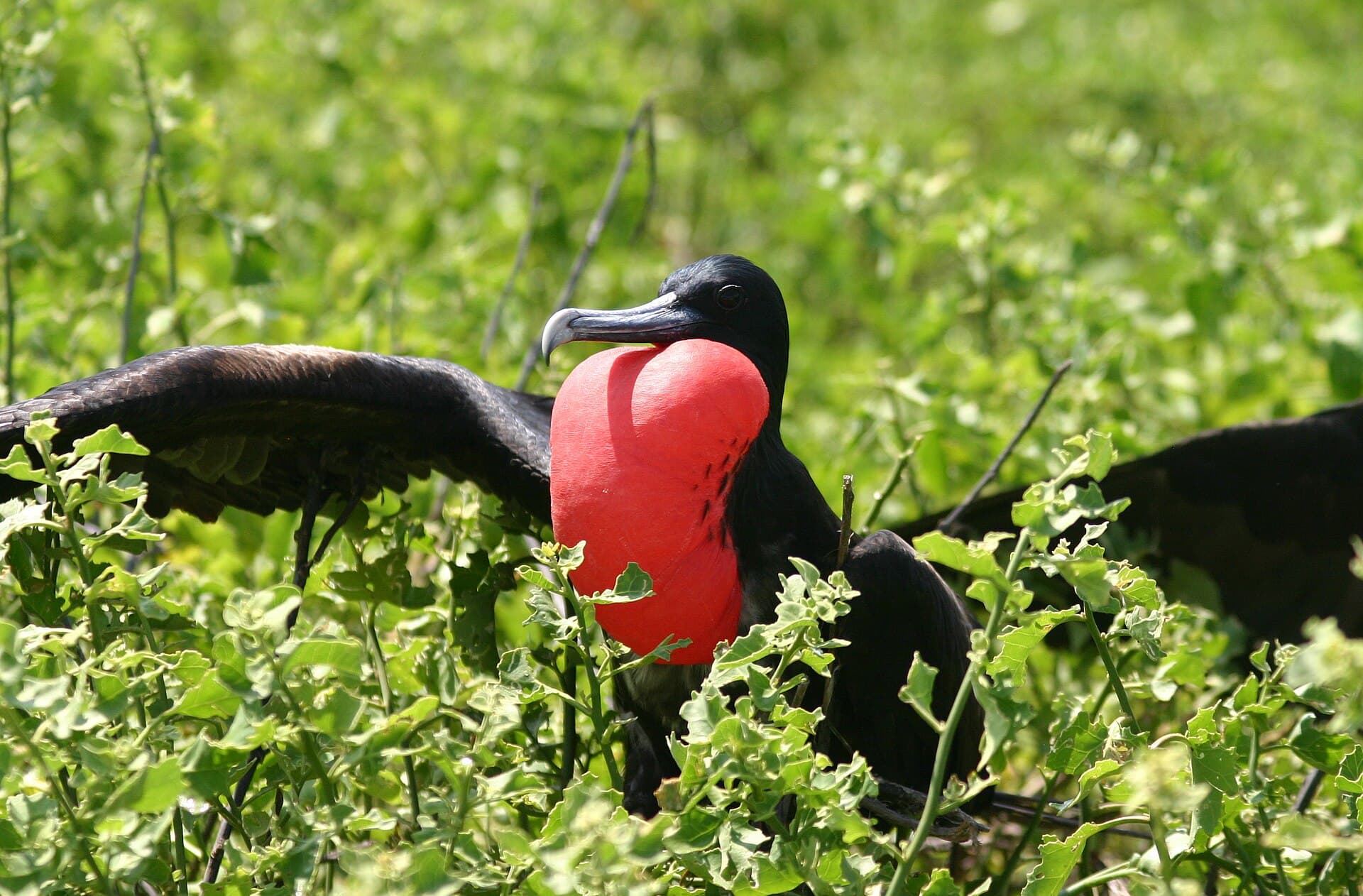
Great Frigatebird
Fregata minor
This bird can fall asleep while flying.
Researchers put brain-activity recorders on Great Frigatebirds and detected sleep while the birds were airborne. Sometimes one brain hemisphere slept; sometimes both did. During their ocean trips, these birds averaged only about forty minutes of sleep a day—far less than on land. The sky is an extraordinary place for a very short nap.
Power Management — Great Frigatebird
Sleep mode does not mean airplane mode.
This is a bird setting. Please do not try it while driving.
What's real?
Brain recordings from adult female Great Frigatebirds detected sleep in one or both hemispheres during flight. Sleep was brief, averaging roughly forty minutes daily on studied ocean trips. Asleep does not mean powered off. This diagram is not live EEG or a controllable bird brain.
Even ocean travelers belong to an island community.
Great Frigatebirds are part of the Galápagos' extraordinary seabird communities. Galápagos Conservancy's biodiversity guide connects these birds with the wider island environment and the importance of its protection.
This is broader conservation education, not a fundraiser for the sleep-recording study. The male in the photo was not one of the female EEG study subjects.
See the fieldwork, meet the researchers, or support bird science.
Meet the Galápagos seabirds ↗Links go directly to conservation organizations.