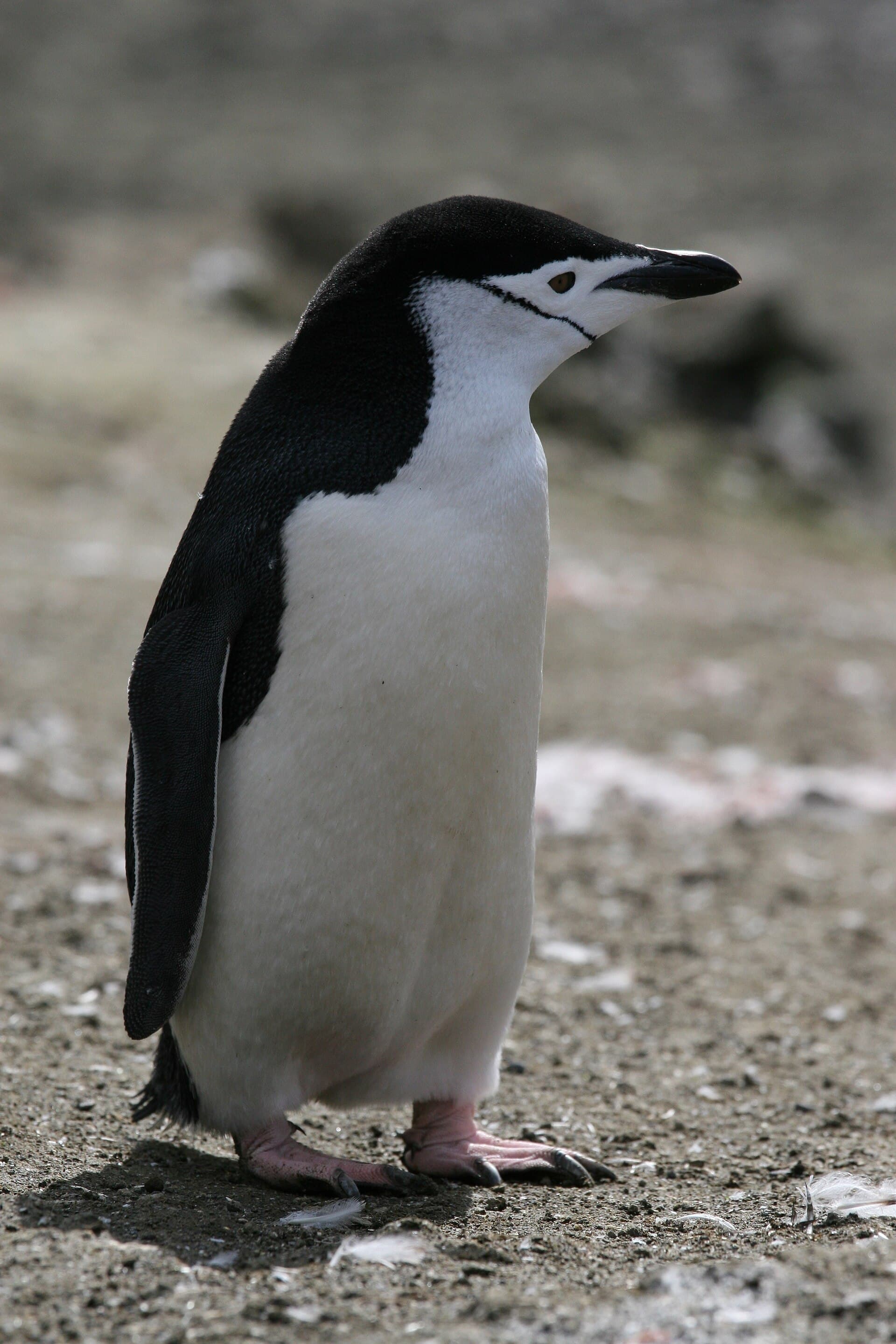
Chinstrap Penguin
Pygoscelis antarcticus
This penguin naps more than 10,000 times a day.
During a study of nesting Chinstrap Penguins, researchers recorded thousands of tiny sleep bouts averaging about four seconds each. Those fragments added up to more than eleven hours of sleep per brain hemisphere in a day. No long lie-in required: these penguins were collecting sleep in astonishingly small installments.
Display Properties — MICRONAP
What's real?
A 2023 study of wild nesting Chinstrap Penguins found more than 10,000 daily sleep bouts averaging about four seconds, totaling more than eleven hours per brain hemisphere. This is an average-bout illustration, not an exact sleep cycle or advice for humans.
Tiny recorders. Big questions about a warming ocean.
Recording penguins' behavior helps researchers understand how they cope with their surroundings. In a 2018–2020 project, British Antarctic Survey scientists used GPS, dive recorders, and small cameras to study how Chinstrap Penguins find food around a warming Antarctic Peninsula.
The linked project is a documented research example, not a currently recruiting expedition. The sleep finding concerns nesting birds, not every penguin year-round.
See the fieldwork, meet the researchers, or support bird science.
Explore the penguin fieldwork ↗Links go directly to conservation organizations.