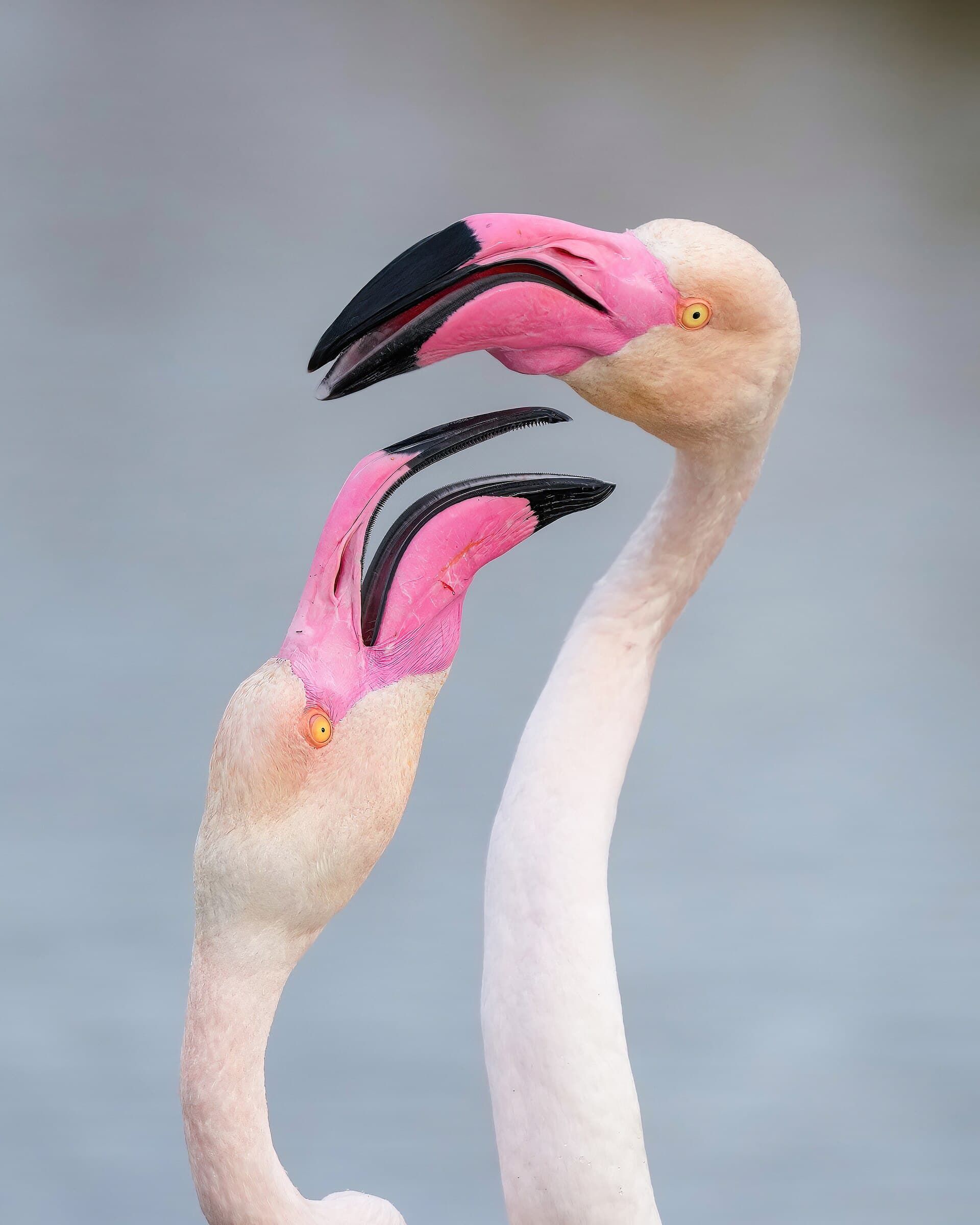
Greater Flamingo
Phoenicopterus roseus
Both flamingo parents make baby food called milk.
A baby flamingo cannot immediately filter-feed like an adult. Both parents can supply a rich secretion from the upper digestive tract, usually called crop milk. It delivers nutrients and pigments to the chick, and parents can become noticeably paler while feeding their young. Parenthood: now available in a less saturated color palette.
PinkJet — Family Utility
What's real?
Both Greater Flamingo parents can provide crop milk, an upper-digestive-tract secretion, to their chick. Parents can become paler during chick rearing. These swatches are illustrative—not an instant per-meal color change, a health gauge, or actual ink.
Wetlands make room for whole families.
Learning about flamingo families is also an invitation to learn about wetlands. WWT shares observations from its Greater Flamingos and works more broadly to restore wetland habitats for wildlife and people.
A captive chick report is not a wild reintroduction program. The linked restoration work is broader wetland conservation.
See the fieldwork, meet the researchers, or support bird science.
Explore wetland restoration ↗Links go directly to conservation organizations.